August 10, 2026

Sourcing and supply of spare parts for axles and brake systems of heavy machinery: differentials, gearboxes, kingpins, brake linings, brake pads. New, used, and remanufactured.
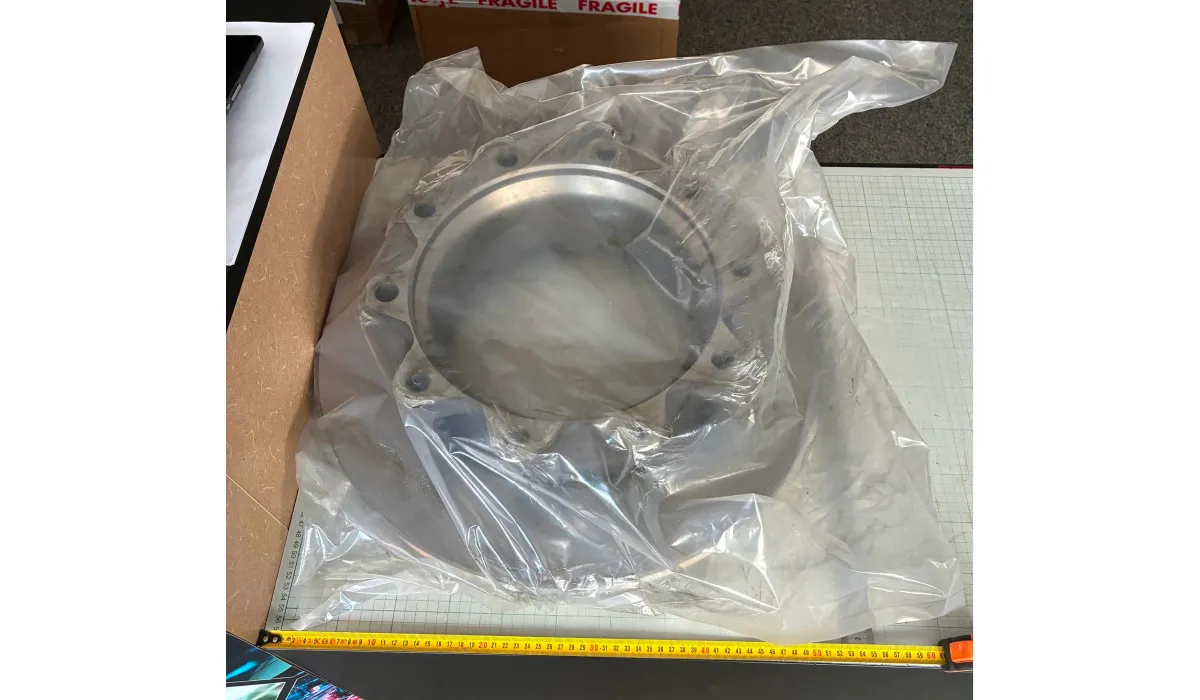
The axle and the brakes are the two assemblies most likely to bring a machine to a standstill. A mobile crane, excavator, or drilling rig can run tens of thousands of engine hours without any intervention in the engine — yet a worn wheel hub bearing, a worn-out kingpin, or a brake lining that's lost its service life can take the machine out of operation in a single working day. At the same time, almost everything "below the frame" is repairable: these assemblies can be disassembled, rebuilt, and put back into service — provided the right components are sourced.
Below is a practical breakdown: what a drive axle consists of, which parts are replaced most often, how new, used, and remanufactured spare parts differ, and what information you need to gather to get an accurate quote on your first inquiry.
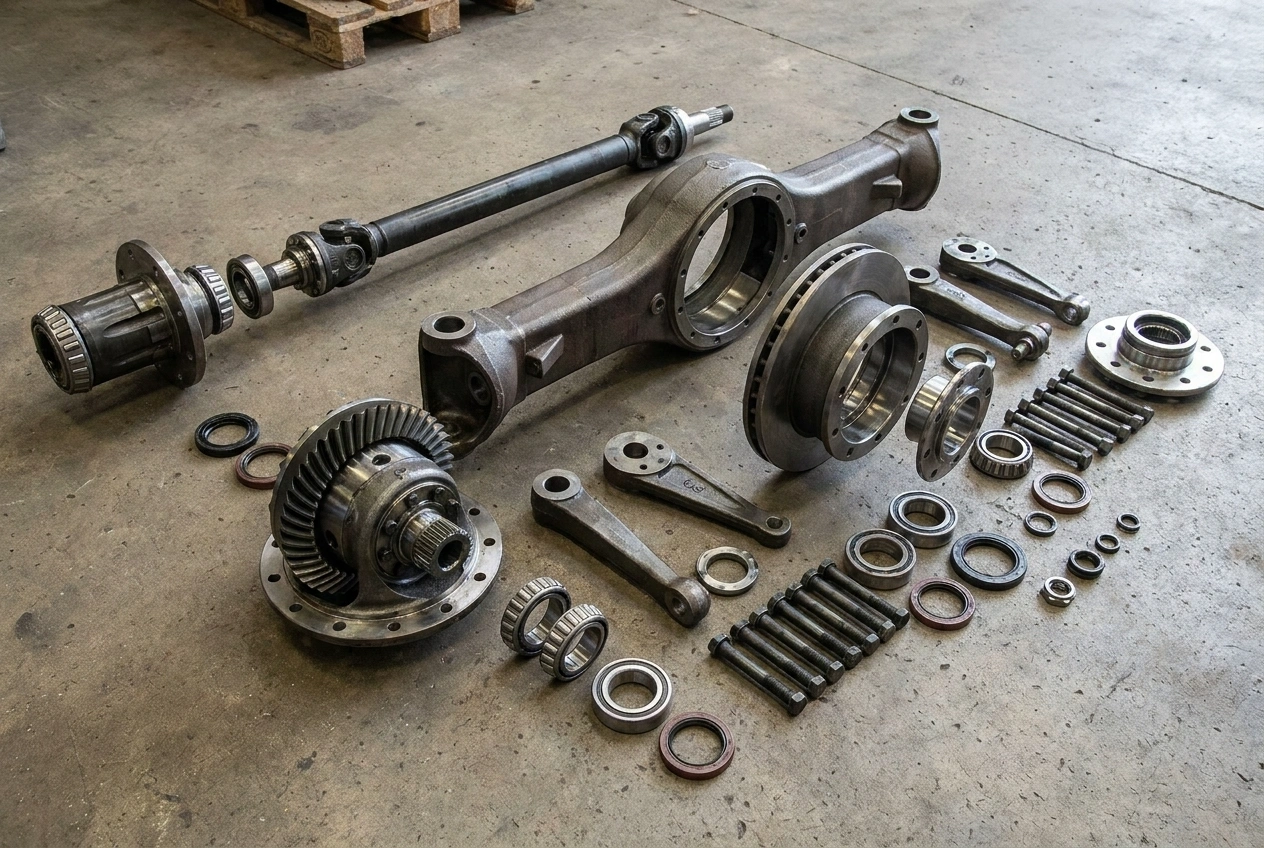
Unlike consumables, axle and brake system parts are rarely "universal." The same crane or excavator model can be fitted with axles from different manufacturers over its production run — Kessler, ZF, Dana, Clark, NAF, Sisu — and even within a single series, gear ratios, mounting dimensions, and seal types can differ. A part that physically fits into place but doesn't match the final drive's gear ratio will destroy the reduction gear within a few shifts.
The second factor is load. Axles on heavy equipment operate under constant shock and tipping loads, and on multi-axle chassis the brake system is often responsible not only for stopping the machine but also for holding it in a working position. Cutting corners on the quality of these parts translates directly into risk for people on site.
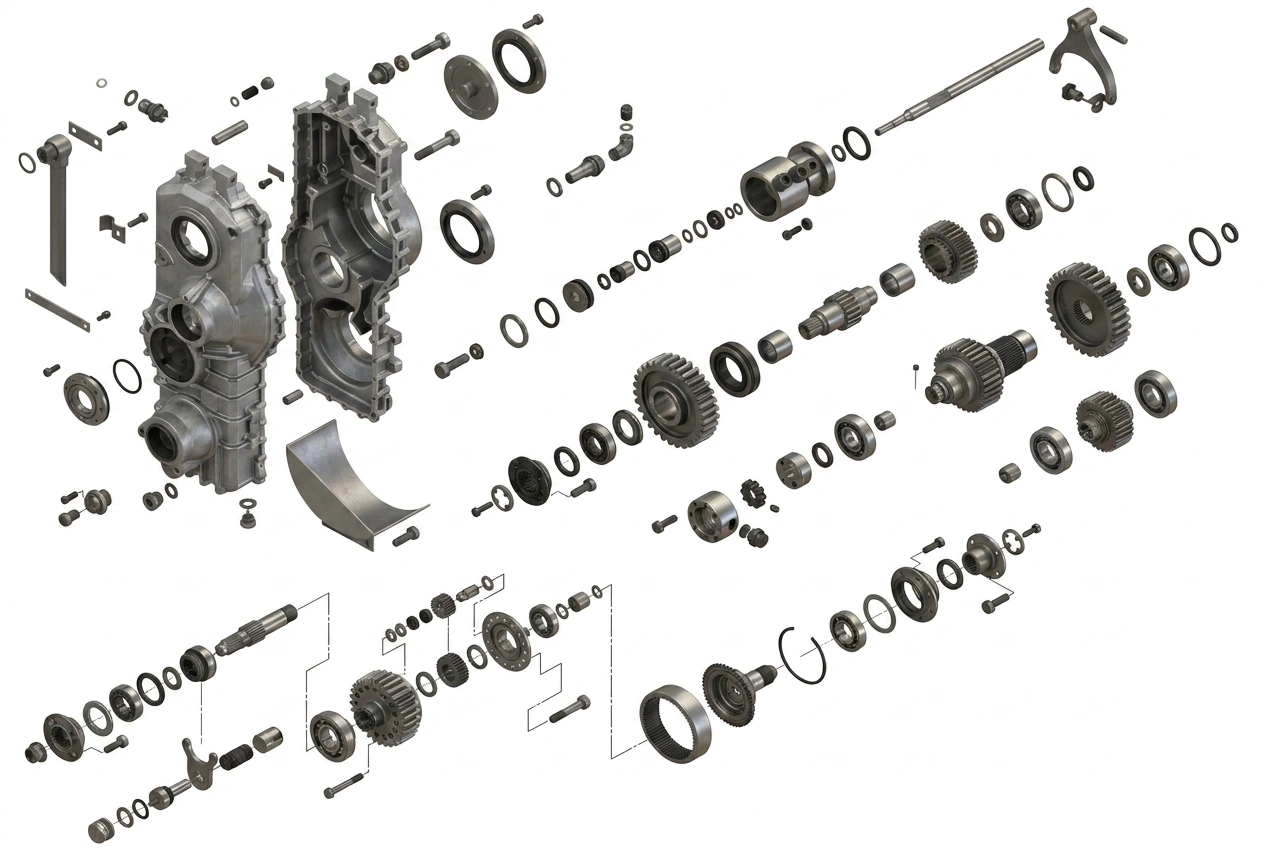
The heart of the axle is the final drive and differential. This includes:
Typical Wear Symptoms: whining noise at a specific speed, a knock when switching between "drive" and "coast," metal shavings in the oil, a leak at the pinion seal.
This is where a "false" fault most often shows up: play in the hub bearing is easily mistaken for a steering problem.
A worn kingpin causes steering wheel wobble and accelerated tire wear, and on multi-axle chassis it disrupts axle steering synchronization.
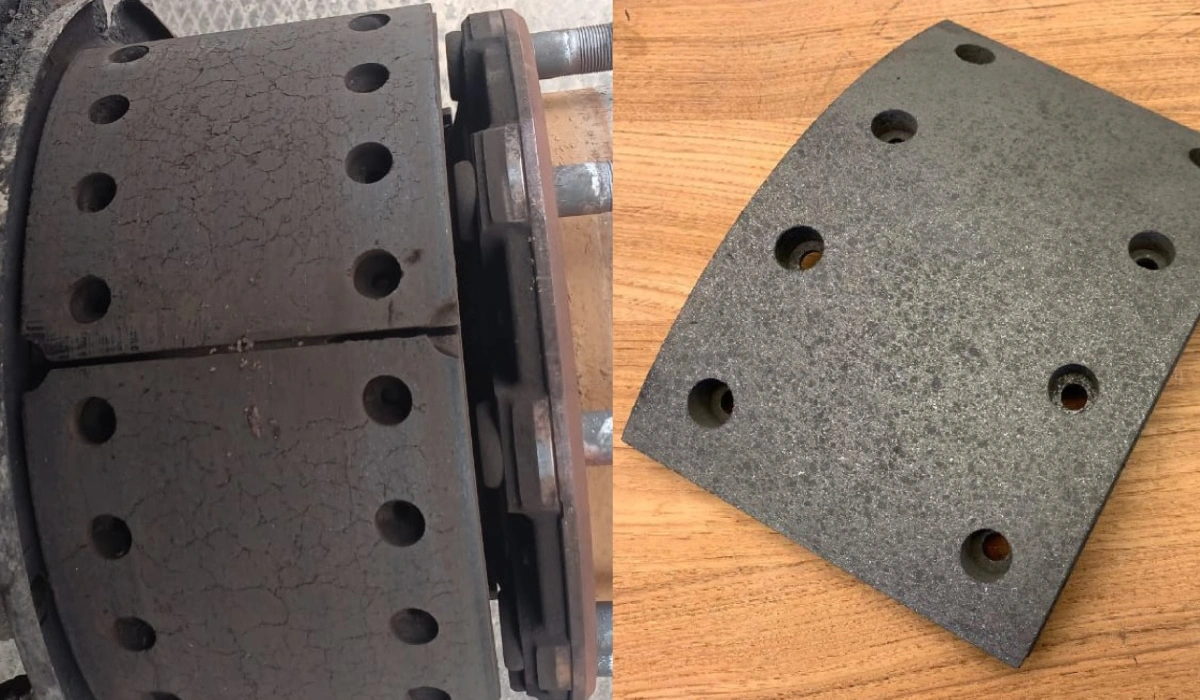
A significant share of heavy equipment still uses drum brakes — they hold up better against dirt, dust, and washdowns. A rebuild kit for this type of mechanism includes:
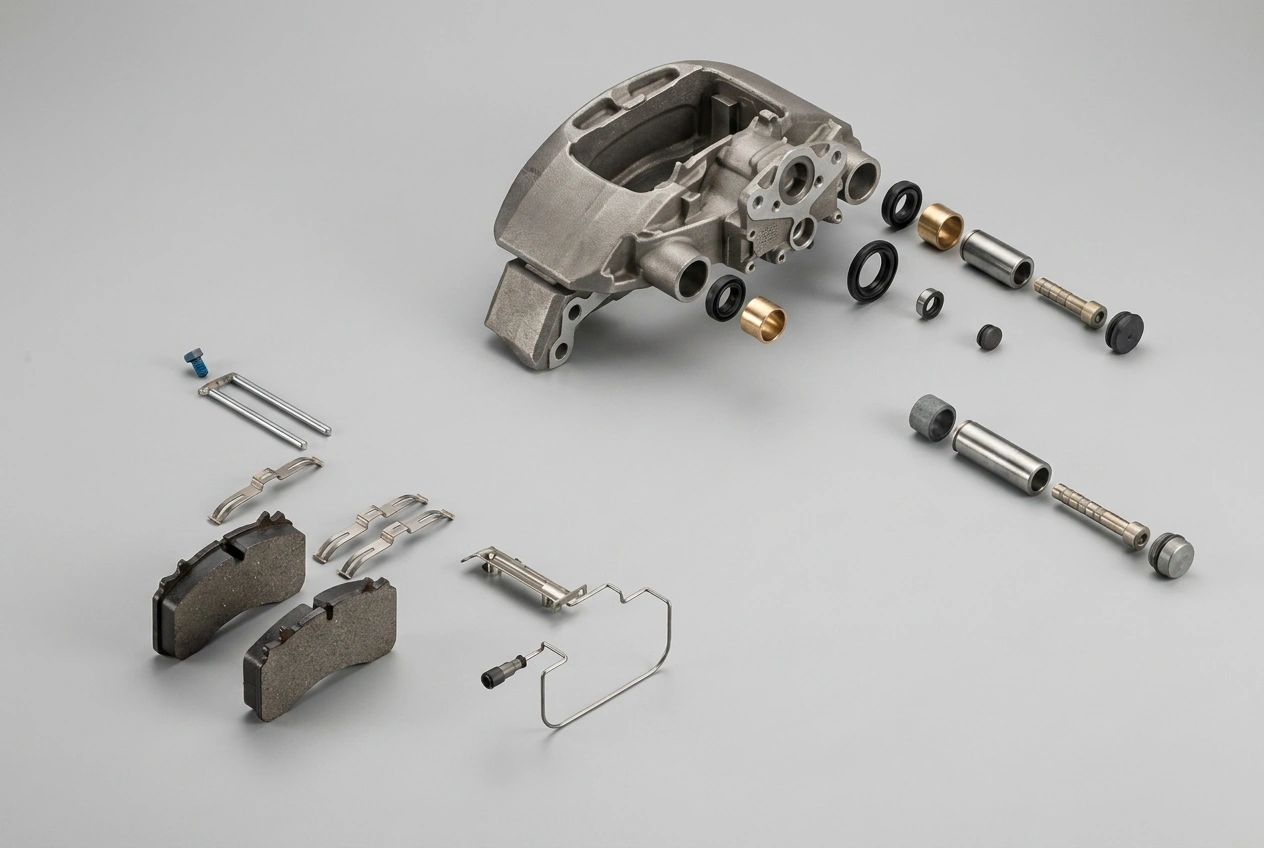
Disc brakes on modern chassis call for a different set of parts: brake discs (rotors), calipers, pad kits with mounting hardware, and lining wear sensors.
Practical tip: buying linings and rivets loose is more cost-effective when a fleet has several units of the same equipment type and the capability to reline shoes in-house. Pre-assembled shoes save time but cost more per set.
Rebuilding versus replacing deserves special mention. A complete axle assembly is one of the priciest line items in any parts catalog. But in most cases, it isn't the entire axle that's failed — it's a specific component: the ring-and-pinion set, one side's planetary gear, or a bearing group. A professional rebuild with worn-part replacement costs substantially less than a new axle, while coming close to matching it in service life.
More than half of parts-supply delays happen not at the warehouse, but at the identification stage. To avoid this, gather the following in advance:
For European-manufactured equipment, a large share of parts are available from warehouses in the EU — delivery time is measured in days. Ordering directly from the manufacturing plant for rare or discontinued components can take anywhere from several weeks to several months. Asian manufacturers of equivalent parts usually offer better pricing but require factoring in sea freight.
For deliveries to Moldova, Ukraine, Romania, and Middle Eastern countries, it's critical to agree on the full document package in advance: invoice, packing list, certificate of origin, transport waybill, and the correct HS code. An incorrect code or a weight mismatch between documents is the most common cause of cargo delays at the border.
ILIEV Solutions specializes in sourcing and supplying spare parts for heavy and specialized equipment: tower and mobile cranes, excavators, drilling rigs, generators, and industrial machinery. We work with a network of vetted suppliers across Europe and Asia, selecting the optimal option based on the "price — timeline — condition" balance — including new original parts, quality equivalents, remanufactured assemblies, and used/take-off parts.
Can a part be identified from a photo alone?
Often, yes — especially for standard items like bearings, seals, fasteners, and linings. But for gear-assembly parts, photos almost always need to be supplemented with the machine's serial number or the axle's nameplate.
What if the machine is discontinued and the original part is no longer available?
Three approaches work: searching dealer stock for remaining inventory, sourcing an equivalent based on geometry and specifications, or manufacturing the part from a sample or drawing. For housing/casting components, a take-off (used) part is often the optimal choice.
Is it mandatory to replace the ring-and-pinion set as a pair?
Yes. The drive pinion and ring gear wear in together, so replacing only one element leads to rapid failure of the pair.
How do you know it's time to replace the kingpins?
The signs are: play when rocking the wheel vertically, the machine pulling to one side, uneven tire wear, and steering that's either stiff or, conversely, feels "loose."
Need a specific part?
Send us the make, model, serial number, and a photo of the part — we'll come back to you with pricing, lead time, and options by condition.
.svg)